Understanding Benchtop Oscilloscopes
In the realm of electronic testing and analysis, a benchtop oscilloscope serves as a critical tool for both professionals and hobbyists alike. These devices allow users to visualize and measure electronic signals, making them indispensable in laboratories, research centers, and even in educational settings. With the continuous evolution of technology, modern benchtop oscilloscopes have become more advanced, offering enhanced features that cater to a wide array of applications. For those looking to refine their skills or enhance their lab capabilities, exploring options like a benchtop oscilloscope for small electronics labs can be incredibly beneficial.
What is a benchtop oscilloscope?
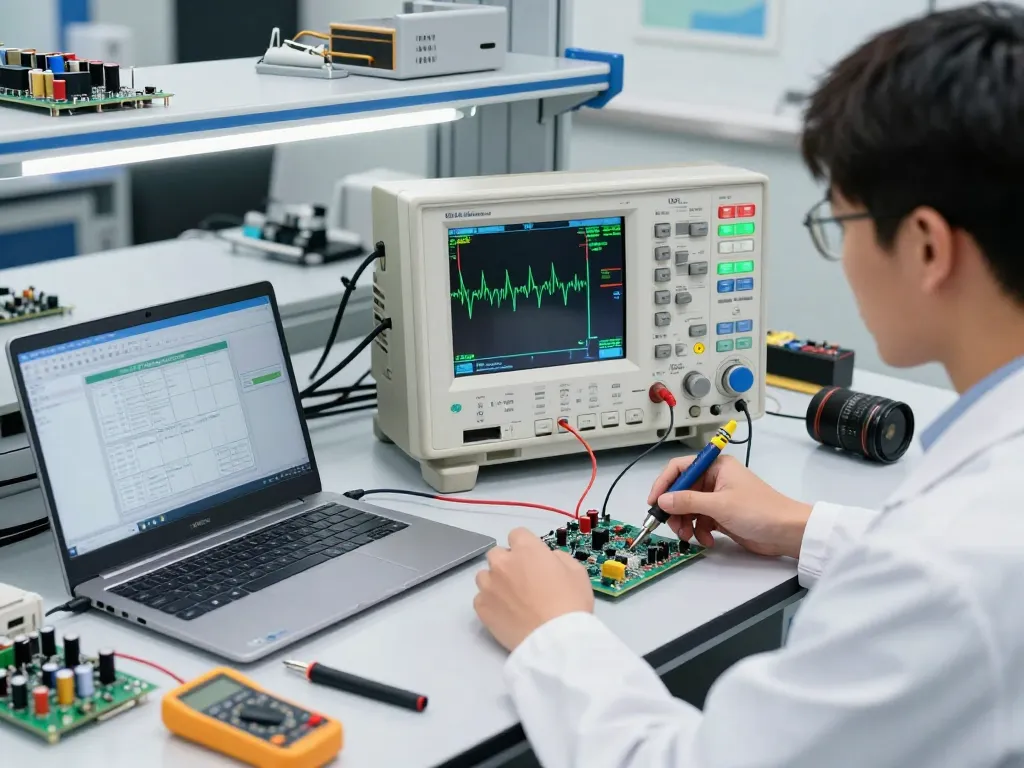
A benchtop oscilloscope is an electronic instrument used to observe the waveform of electronic signals. It displays voltage over time, allowing users to visualize how signals behave in real-time. Unlike handheld oscilloscopes, benchtop versions are larger, typically featuring a robust interface with multiple channels and advanced measurement capabilities. This makes them ideal for in-depth analysis and complex signal assessment, essential for tasks ranging from debugging circuits to designing new electronic systems.
Key features to look for in a benchtop oscilloscope
When selecting a benchtop oscilloscope for small electronics labs, consider the following key features:
- Bandwidth: Higher bandwidth allows for more accurate signal representation. For most applications, a bandwidth of 100 MHz to 200 MHz is sufficient.
- Sampling Rate: The sampling rate, measured in samples per second (Sa/s), affects how accurately an oscilloscope can capture signal changes. Look for a minimum of 500 MSa/s.
- Channels: More channels enable simultaneous observation of multiple signals. Two-channel oscilloscopes are common, but four-channel models offer more extensive analysis capabilities.
- Display Quality: A high-resolution display (at least 7 inches) is beneficial for clarity, allowing for easy interpretation of signals.
- Triggering Options: Advanced triggering options are essential for capturing intermittent signals and anomalies, improving measurement accuracy.
Applications of benchtop oscilloscopes in electronics labs
Benchtop oscilloscopes find extensive application across various domains in electronics labs, including:
- Signal Analysis: Used for detailed analysis of waveforms and signal integrity assessments.
- Debugging: Essential for troubleshooting electronic circuits and identifying fault conditions.
- Research and Development: Crucial for designing, testing, and validating new electronic products and prototypes.
- Education: Widely used in educational settings for teaching students about electronics and circuit design.
Choosing the Right Oscilloscope for Small Electronics Labs
Selecting the appropriate benchtop oscilloscope is vital for achieving accurate results in any electronics lab. Various factors must be considered to ensure that the chosen instrument meets the specific needs of the lab environment and application.
Comparison: 110MHz vs. 200MHz oscilloscopes
When comparing 110MHz and 200MHz oscilloscopes, the primary difference lies in their bandwidth capabilities, which directly impacts how signals are captured and displayed. A 200MHz oscilloscope can accurately analyze higher frequency signals, making it more suitable for advanced applications, such as RF testing or high-speed digital signal analysis. In contrast, a 110MHz oscilloscope typically suffices for general electronics tasks.
Pricing considerations for benchtop oscilloscopes
The price of benchtop oscilloscopes can vary significantly based on features, brand, and capabilities. Budget models start around $300, while high-end oscilloscopes can cost several thousand dollars. It's essential to balance the budget with the required features; investment in a quality oscilloscope can lead to better performance and greater longevity.
Evaluating brand reliability and user reviews
Brand reputation plays a crucial role in selecting an oscilloscope. Established brands often guarantee reliability and support. User reviews can provide additional insight into the performance and durability of specific models. Look for oscilloscopes from reputable manufacturers, such as Hanmatek, Tektronix, or Keysight, and pay attention to feedback regarding usability and serviceability.
Best Practices for Using Benchtop Oscilloscopes
To maximize the performance and lifespan of benchtop oscilloscopes, adherence to best practices is essential. Proper setup, calibration, and maintenance can significantly enhance measurement accuracy and reliability.
Setup and calibration tips for accuracy
Before using an oscilloscope, it is crucial to ensure proper setup and calibration. Always use appropriate probes and adjust the vertical and horizontal scales based on the expected signal. Additionally, calibrate the oscilloscope periodically to maintain accuracy over time.
Common signal analysis techniques
Familiarize yourself with various signal analysis techniques to utilize your oscilloscope effectively. Techniques include:
- Peak-to-Peak Measurement: Measuring the voltage difference between the highest and lowest points of the waveform.
- Frequency Calculation: Determining the frequency of the waveform to assess signal properties.
- Time-Domain Analysis: Analyzing how signal changes occur over time, pivotal for debugging.
Maintaining your oscilloscope for long-term performance
Proper maintenance is key to ensuring longevity and performance. Regularly clean the device, avoid excessive exposure to dust, and store it in a protective case when not in use. Regular software updates can also enhance functionality and add new features.
Real-World Applications in Small Electronics Labs
The practical applications of benchtop oscilloscopes in small electronics labs extend beyond theoretical learning, enhancing hands-on experiences.
Case studies of successful implementations
Many small electronics labs have reported improved efficiency and accuracy through the integration of benchtop oscilloscopes. For instance, a university lab using Hanmatek oscilloscopes for student projects found that real-time waveform visualization significantly improved their understanding of complex concepts.
Educational use: Teaching with oscilloscopes
Benchtop oscilloscopes serve as vital educational tools, bridging the gap between theory and practice. They allow students to observe and analyze real-time signals, facilitating a deeper grasp of circuit behavior and electronic principles.
DIY projects: Enhancing home electronics experiments
Hobbyists and DIY enthusiasts utilize benchtop oscilloscopes to enhance their electronics experiments. With capabilities to analyze complex waveforms, these tools empower users to refine their projects, from audio signal processing to RF experimentation.
Future Trends in Oscilloscope Technology
As technology continues to evolve, so too do benchtop oscilloscopes. Emerging trends suggest enhancements in functionality, ease of use, and integration with modern technology.
Emerging features in 2026 benchtop oscilloscopes
In 2026, we can expect benchtop oscilloscopes to integrate advanced features, including higher bandwidth capabilities, better display technology, and enhanced connectivity options, allowing for seamless integration with other lab equipment.
The role of software integration in modern oscilloscopes
Modern oscilloscopes are increasingly relying on robust software integration, enabling complex data analysis, automation of repetitive tasks, and improved user interfaces. This integration allows for more sophisticated analysis and ease of use.
Predicting the evolution of electronics lab equipment
The future of electronics lab equipment points towards increased automation and intelligence. As smart technology evolves, we can expect lab equipment, including oscilloscopes, to become more user-friendly and capable, enhancing the research and learning experience.
What are the advantages of using a benchtop oscilloscope for small electronics labs?
Benchtop oscilloscopes offer numerous advantages, including higher accuracy, real-time signal visualization, and the ability to handle complex signal types, which are invaluable for both learning and practical applications in electronics.
How do I choose the right bandwidth for my applications?
Choosing the right bandwidth depends on the frequency range of the signals you expect to analyze. Higher bandwidth is necessary for high-speed signals, while lower bandwidth may suffice for basic applications.
Are there notable brands to consider when purchasing an oscilloscope?
Yes, brands like Hanmatek, Tektronix, and Keysight have established themselves as leaders in the oscilloscope market, known for their reliability and advanced features.
What maintenance tips ensure the longevity of my oscilloscope?
To maintain your oscilloscope, ensure that it is regularly calibrated, kept clean, and protected from dust and extreme conditions. Proper handling and periodic updates will also preserve functionality.
How do I effectively analyze signals using my oscilloscope?
Effective signal analysis involves setting appropriate time and voltage scales, utilizing triggering features for stable displays, and mastering measurement techniques to interpret waveforms accurately.