
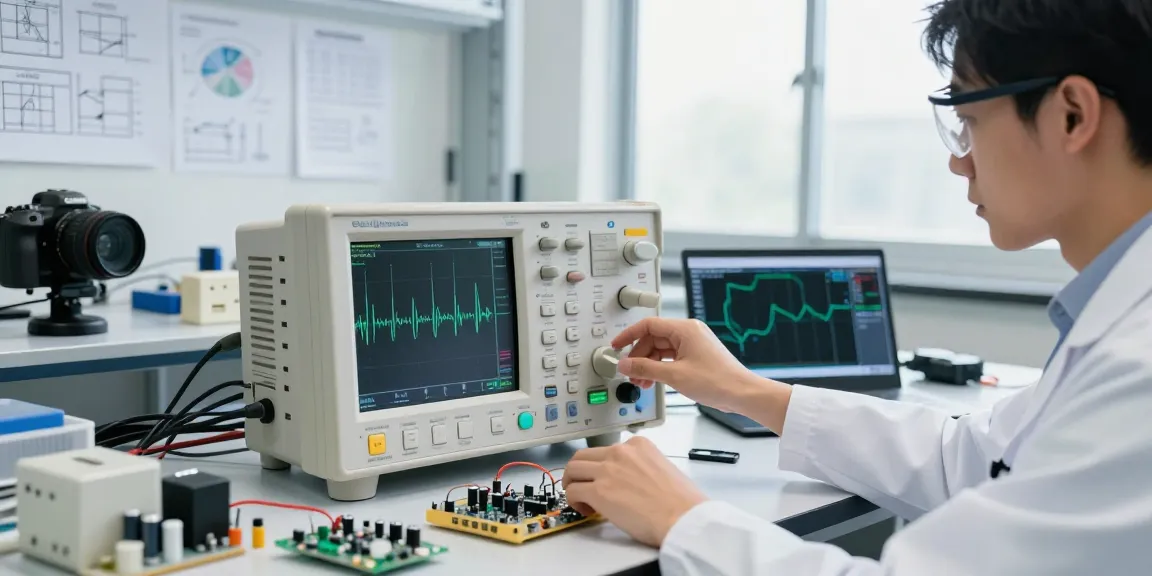
Understanding the Basics of Digital Oscilloscopes
In the world of electronics, understanding signal behaviour is paramount for both hobbyists and professionals. Among the essential tools for this purpose is the Digital Oscilloscope, a crucial device for visualising electrical signals. This article will delve into the features, benefits, and practical applications of digital oscilloscopes, particularly focusing on the HANMATEK® DOS1202 model, which stands out for its impressive specifications and user-friendly design. By mastering the use of a digital oscilloscope, users can troubleshoot circuits, analyse waveform data and conduct experiments with precision.
What is a Digital Oscilloscope?
A digital oscilloscope is an electronic instrument that graphically displays voltage signals over time. Unlike its analogue counterparts, a digital oscilloscope samples the incoming signals and displays them digitally, offering more accuracy and various functionalities such as storage and complex calculations. This instrument is vital in electronic testing and development, as it allows engineers to observe and understand the behaviour of signals in real-time.
Key Components and Features Explained
- Display Screen: A bright and clear screen is crucial for reading waveforms effectively. Many modern oscilloscopes feature high-resolution LCD displays.
- Input Channels: Most digital oscilloscopes come equipped with multiple channels, often allowing users to compare several signals simultaneously.
- Control Interface: Intuitive buttons and knobs enable easy adjustment of settings such as time base and voltage scale.
- Memory Storage: This feature allows for the saving of waveforms for later analysis, which is essential for long-term projects.
- Trigger Systems: Trigger settings help in stabilising repetitive waveforms, making it easier to analyse their characteristics.
Types of Digital Oscilloscopes and Their Applications
Digital oscilloscopes can be categorised into various types, each suited to specific applications:
- Benchtop Oscilloscopes: Ideal for laboratory settings, benchtop models such as the HANMATEK® DOS1202 are designed for precision testing and analysis.
- Handheld Oscilloscopes: Portable and battery-operated, these are suitable for fieldwork and troubleshooting on-site.
- Mixed Signal Oscilloscopes: These instruments can handle both analogue and digital signals, making them versatile for complex circuit analysis.
- Storage Oscilloscopes: Great for capturing and storing transient signals, beneficial in diagnostic work and signal processing.
How to Use a Digital Oscilloscope Effectively
Utilising a digital oscilloscope effectively involves several key steps, from setup to data interpretation. Mastery of these steps is essential for accurate signal measurement and analysis.
Setting Up Your Digital Oscilloscope
- Safety Preparation: Ensure the oscilloscope is set up in a safe environment, away from moisture and with stable power supply.
- Power On and Initialization: Turn the device on and allow it to complete its self-check and initialisation processes.
- Connect Signal: Use the appropriate probes to connect the oscilloscope to the circuit or signal source you wish to measure.
Interpreting Waveforms: A Step-by-Step Guide
Once the oscilloscope is correctly set up, interpreting the waveforms is crucial. Pay attention to key parameters such as voltage amplitude, frequency, and shape.
When analysing a waveform, ensure the time base is set correctly to capture the signal dynamics. Adjust the voltage scale to fit the waveform neatly within the display for better visibility.
Common Measurement Techniques
- Peak-to-Peak Voltage Measurement: This measurement helps to determine the maximum voltage swing of a signal.
- Frequency Measurement: By calculating the time period between cycles, the frequency of the signal can be determined.
- RMS Voltage Measurement: Useful for understanding the effective value of a voltage signal.
- Triggering Techniques: Using a trigger system stabilises the waveform display, allowing for accurate timing measurements.
Troubleshooting Common Issues with Digital Oscilloscopes
Even experienced users may encounter challenges while operating digital oscilloscopes. Here are some common issues and their resolutions:
Identifying Signal Noise and Distortion
Signal noise can disrupt the clarity of waveform readings. It's essential to diagnose whether the noise is from the circuit under test or from the oscilloscope itself. Using proper grounding techniques and ensuring probes are compensated can help mitigate this issue.
Calibration Issues: How to Fix Them
Calibration is crucial for accurate measurements. Regularly calibrate your instrument according to the manufacturer’s specifications to maintain precision.
Resolving Software Glitches and Errors
Software errors can occur in digital oscilloscopes. Regular updates and resets can resolve most software-related issues, ensuring that the device operates smoothly.
Comparing Digital Oscilloscopes: Choosing the Right One
When selecting a digital oscilloscope, several performance metrics and features should be compared to ensure it meets your specific needs.
Performance Metrics to Consider
- Bandwidth: Determines the range of frequencies the oscilloscope can accurately measure. For example, a 200 MHz oscilloscope like the HANMATEK® DOS1202 is suitable for high-speed digital signals.
- Sample Rate: Higher sample rates allow for more accurate representations of the waveform.
- Memory Depth: Adequate memory storage is essential for capturing long-duration signals with high resolution.
Price vs. Functionality: What to Look For
Finding the right balance between cost and functionality is crucial. While higher-priced models often provide more features, it's essential to assess whether these features align with your needs.
Real-World Use Cases: Which Oscilloscope is Best for You?
Depending on your application, different models may be more suitable. Engineers working on high-speed circuits would benefit from a 200 MHz oscilloscope, while educational institutions might opt for more user-friendly models to facilitate learning.
Future Trends in Digital Oscilloscope Technology
The field of digital oscilloscopes is rapidly evolving, with new technologies promising to enhance functionality and ease of use.
Innovations to Expect by 2026
Anticipated advancements include enhanced user interfaces and integration with cloud technology for data storage and sharing, making analysis more collaborative.
The Rise of Smart Oscilloscopes
Smart oscilloscopes that incorporate AI for predictive analysis and troubleshooting will likely become commonplace, allowing for faster fault detection and diagnosis.
Impact of AI on Signal Analysis
Artificial intelligence is set to revolutionise how signals are analysed. Enhanced algorithms will help identify patterns and anomalies in signal behaviour, providing users with deeper insights.
FAQs about Digital Oscilloscopes
What should I consider when buying a Digital Oscilloscope?
Consider factors like bandwidth, sample rate, memory depth, and the specific applications for which you need the device.
Can I use a Digital Oscilloscope for high-frequency signals?
Yes, models with high bandwidth, such as the HANMATEK® DOS1202, are specifically designed for high-frequency signal analysis.
How do I maintain my Digital Oscilloscope?
Regular calibration, keeping the device clean, and following the manufacturer's guidelines will ensure longevity and accuracy.
What are the best practices for using a Digital Oscilloscope?
Always use properly compensated probes, avoid exceeding the voltage rating, and ensure safe grounding when conducting measurements.
What common mistakes should I avoid with a Digital Oscilloscope?
Avoid incorrect settings, neglecting calibration, and overlooking safety precautions when operating the device.